
Billing Software 

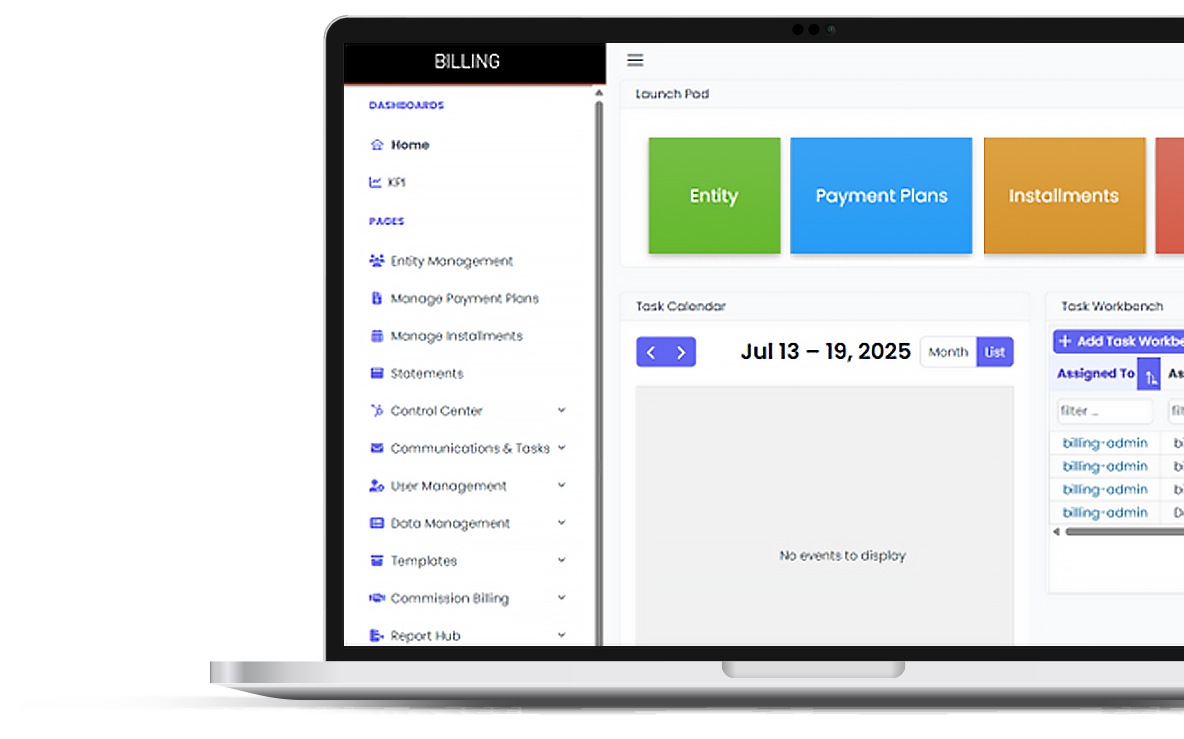
Riskonnect’s insurance billing software helps you streamline the insurance payment process to efficiently service your policyholders and agents.

Automate the insurance billing process from start to finish. Create invoices, identify late payments, and trigger follow-up action.

Manage transactions from any device. View installment plans, fees, commission payments, and billing transactions from any device

Get faster, more accurate payments. Amend payment details, waive fees, manage refunds, and handle reinstatements at any point in the billing cycle.
Billing Software

Product Highlights

  • Account and
    Policy Billing
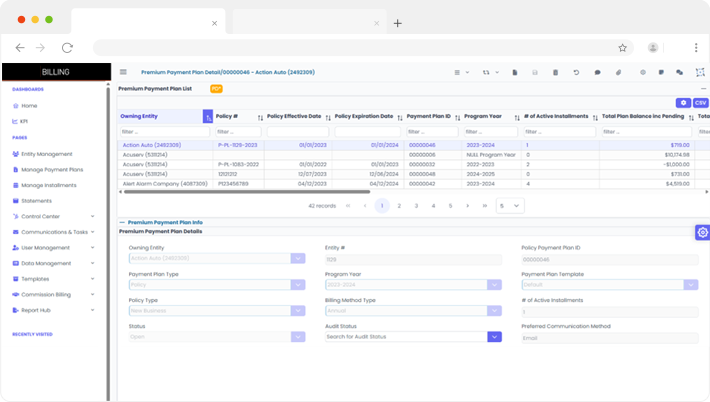
    Bring installment creation, financial aggregation, entity information, and related activities into one, centralized location.
  • Accounts Receivables
    and Accounts Payables
    Track all incoming payments and provide full reconciliation at both the installment- and payment-plan levels.
  • Commission
    Billing
    Automate commission calculations and multilevel commission plans at both policy and coverage levels.
  • Deductible
    Billing
    Process bill-back deductible amounts to the policyholder.
  • Installment and
    Invoice Automation
    Calculate, create, and adjust installments at any time.
  • KPIs, Tasks,
    and Alerts
    Manage all actionable items, delinquency notifications, and alerts from one place.
  • Self-Service
    Payment Intake
    Make self-service payments such as EFT, credit cards, checks, and cash, through a mobile-enabled portal.
  • Reports and
    Dashboards
    Visualize financial details quickly and effectively.


Healthcare Providers Insurance Company

With Riskonnect solutions, we’re making our internal working processes much more efficient, which generates savings and time for staff to focus on truly value-adding tasks.

Healthcare Providers Insurance Company

Grow Your Business

with a Modern, Intuitive Solution

Are you locked into an inflexible payment system? Riskonnect’s insurance billing software creates customized payment and installment plans, issues invoices, and sends bill-pay notifications with a single click.

  • Streamline the process with preconfigured billing and payment plans.
  • Accept multiple payment types, including ACH, credit, and debit cards.
  • Automatically calculate billing, payment, and statements for agency/broker commissions.
Improve Cash Management
and Decrease Billing Leakage

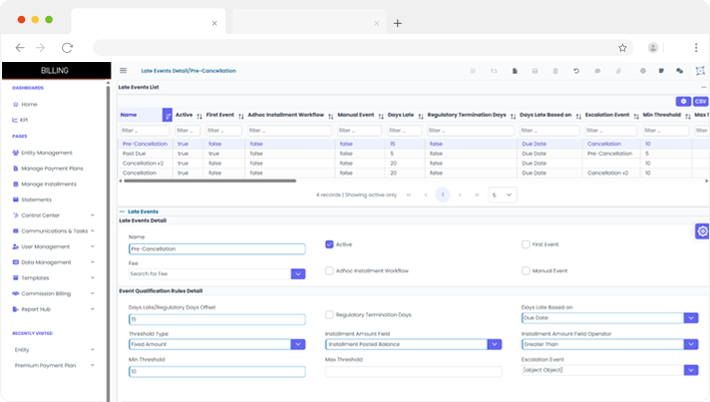
Are late payments piling up unnoticed? Riskonnect’s insurance billing software gives you instant access to critical information like past due dates for a real-time picture of billing and payment transactions.

  • Identify uncollected premiums to reduce billing leakage.
  • Leverage configurable and automated delinquency processing.
  • Track payables and generate checks and balances accordingly.

Deliver Excellent

Customer Service

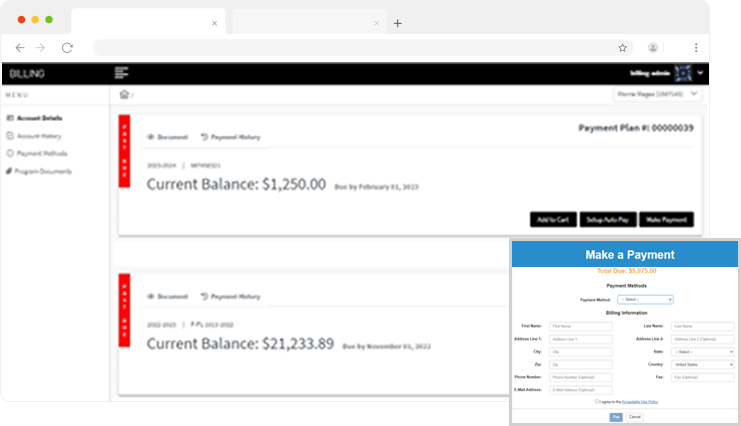
Are you losing business because your insurance billing software can’t keep up? Riskonnect’s insurance billing software provides accurate insurance billing information to service your customers with confidence.

  • Consolidate premiums and invoices to reduce costs.
  • Preview and make billing changes at any time.
  • View a comprehensive history of all accounts and transactions.
Get Started with These Helpful Resources


Claims administration ebook
EBOOK
The Complete Guide to
Claims Administration Software
This guide will help you understand what’s possible with today’s claims management software so you can evaluate your options and decide what is right for you.
EBOOK
Policy Administration
Software to Accelerate Success
This guide will help you decide if the advantages of new software are worth the effort involved with making a change.
RFP insurance billing software download
RFP TEMPLATE
Starting an RFP process
for insurance billing software?
Download Riskonnect’s list of the most critical insurance billing-related questions and customize it to suit your needs.

Customers with Enhanced Insurance Billing Programs

Also Use

Risk Management
Information System
Seamlessly consolidate data from multiple sources, automate routine processes, and use sophisticated analytics to turn complicated information into actionable intelligence.
Claims Management
Integrate people, systems, and claims data and automate routine processes, so you can focus on resolving even the most complex claims quickly, easily, and fairly.
Policy Administration
Manage the insurance policy lifecycle, from inception through renewals.

Start anywhere. Expand everywhere.

Industry Recognition for Riskonnect

Redhand Advisors Forrester Wheelhouse Advisor

Start partnering with Riskonnect today.
Find out how Riskonnect can transform the way you view risk.

Your Insurance Billing Software Questions Answered

Insurance billing software is a platform for automating and managing the premium collection and payment cycle for insurance programs — from invoice generation through payment processing, reconciliation, and delinquency management. It handles the full range of billing transactions that flow between insurers or program administrators and their policyholders, agents, and brokers: installment plan creation and management, commission calculations, deductible bill-backs, accounts receivable tracking, and self-service payment intake. The goal is to replace manual, error-prone billing processes with a system that automates routine tasks, reduces billing leakage, gives operations staff real-time visibility into payment status, and provides policyholders and agents with a modern, self-service billing experience.

Billing leakage refers to premium that has been earned and invoiced but not collected — due to late payments that go unnoticed, errors in invoice generation, manual reconciliation failures, or insufficient follow-up on delinquent accounts. In large insurance programs with many policies and payment plans, even small leakage rates represent significant lost revenue. Insurance billing software prevents leakage by automating the identification of uncollected premiums, triggering configurable delinquency processing workflows when payments are overdue, providing real-time visibility into outstanding balances at both the installment and payment-plan levels, and generating alerts for billing staff before overdue amounts compound. Without automation, billing staff typically discover leakage only when it has already grown — software moves the detection point earlier in the cycle, when recovery is easier and less costly.

Modern insurance billing platforms support a wide range of payment methods to accommodate different policyholder and agent preferences. Standard electronic payment types include ACH (Automated Clearing House) transfers, credit card, and debit card payments. Traditional methods including checks and cash are also typically supported. Self-service digital portals allow policyholders to initiate and manage their own payments from any device — including mobile — without requiring contact with billing staff. Riskonnect’s platform accepts multiple payment types through a mobile-enabled self-service portal and supports EFT, credit cards, checks, and cash intake. Supporting multiple payment methods reduces friction in the payment process, which in turn reduces late payments and the administrative cost of following up on them.

Commission billing is the process of calculating and disbursing compensation to the agents and brokers who produce and service insurance policies. Commission structures in insurance can be complex: rates vary by product, coverage, and line of business; hierarchical arrangements mean that production commissions may flow up through managing general agents before reaching the carrier; and adjustments may be required when policies cancel, renew at different terms, or undergo mid-term endorsements. Manually calculating commissions across a large book of business is time-intensive and creates significant reconciliation challenges. Insurance billing software automates commission calculations by applying defined commission rules at the policy and coverage level, handling multilevel commission plan structures, generating commission statements for agents and brokers, and calculating adjustments when policy changes affect earned premium. This automation reduces the staff time required for commission processing and the disputes that arise from calculation errors.

Deductible billing refers to the process of recovering deductible amounts from policyholders after a claim has been paid. When an insurer pays a claim subject to a policyholder deductible, it advances the full payment to the claimant and then bills the insured for the deductible portion. Managing this bill-back process manually — tracking which claims have deductible obligations, what amounts have been billed, what has been collected, and what remains outstanding — adds significant complexity to both the claims and billing functions. Insurance billing software handles deductible billing by automating the calculation and issuance of deductible invoices as claims are resolved, integrating with the claims management system so that billing records reflect actual claim settlements, and tracking collection status through the same accounts receivable workflow used for premium billing.

Accounts receivable (AR) management in insurance billing covers the tracking and collection of all premium and fee payments owed to the insurer or program administrator. Effective AR management requires knowing, at any given moment, what has been invoiced, what has been paid, what is currently due, and what is past due — at both the individual installment level and the aggregate payment plan level. Insurance billing software provides this visibility through real-time dashboards and reports that surface outstanding balances, aging schedules, and delinquency status. It also provides the operational tools needed to act on that data: automated delinquency notices, configurable payment plan modification workflows, and reconciliation tools that match incoming payments to the correct invoices and accounts. Riskonnect’s platform provides full reconciliation at both the installment and payment-plan level, giving finance and billing teams an accurate, auditable record of the organization’s insurance receivables position.

Self-service payment intake allows policyholders and agents to view their billing information, manage their payment preferences, and make payments directly through a digital portal — without calling or emailing the insurer’s billing department. For insurance operations teams, self-service payment capability directly reduces the volume of inbound billing inquiries and the staff time required to handle routine payment transactions. For policyholders, it provides the convenience and transparency that are increasingly expected from service providers. Modern self-service portals are mobile-enabled so that payments can be made from any device, and they support multiple payment methods. Riskonnect’s billing platform includes a mobile-enabled self-service portal that handles EFT, credit and debit card, check, and cash payments, allowing policyholders to manage their own accounts with minimal friction.

Installment plans allow policyholders to pay their annual premium in multiple payments over the policy period rather than as a single upfront sum. Managing installment plans manually — calculating installment amounts, adjusting them when policies change mid-term, generating invoices on schedule, and tracking payment against each installment — becomes unmanageable at scale. Insurance billing software automates installment plan management by calculating installment schedules based on configurable plan parameters, adjusting installments dynamically when endorsements or audits change the premium, generating invoices automatically on the billing date, and tracking payment status at the individual installment level. Riskonnect’s platform supports installment creation and adjustment at any point in the billing cycle and allows billing staff to preview and make changes before they take effect — providing flexibility without sacrificing control.

Insurance billing doesn’t operate independently — it sits at the intersection of the policy record and the claims process, and errors or delays in data flow between these systems create financial risk for the insurer. When a policy is issued, endorsed, or renewed, billing needs an accurate premium figure and effective date to generate the correct invoice. When a claim is settled with a deductible obligation, billing needs claim settlement data to issue the deductible invoice. When a policy cancels, billing needs to calculate and process any return premium. When these systems share a platform, these data flows happen automatically rather than requiring manual export-import or dual data entry. Riskonnect’s insurable risk suite integrates policy administration, insurance billing, and claims management in the same environment — so billing accuracy reflects the current state of the policy and claims record without manual synchronization.

Common signs that billing software is limiting rather than supporting the business include: staff spending significant time on manual invoice adjustments and payment reconciliation that should be automated; inability to support new payment methods that policyholders and agents expect; delinquency management that relies on manual follow-up rather than automated workflows; commission calculations that require spreadsheets or external tools; difficulty generating accurate AR aging reports on demand; and an inability to offer self-service payment capability to policyholders. If any of these describe your current billing operation, the operational and customer experience costs of legacy software are likely exceeding the disruption of change. Riskonnect’s 7 Reasons to Update Your Billing Software covers the key indicators in more detail, and the Insurance Billing RFP template provides a structured framework for evaluating replacement options.