


2026 Riskonnect Survey: Pressure Mounts as Risk Teams Cope with Iran War, Tariffs, and AI
The Iran war disrupted global energy and shipping markets. Trade policies and tariffs impacted costs, market access, and supply chains. And AI continues to reshape how companies operate and their risk exposures, according to Riskonnect’s 2026 New Generation of Risk Report.
This fourth annual report surveyed more than 250 risk, compliance, and resilience professionals worldwide on how they and their organizations are responding to a risk environment moving faster than ever.
Top Risk Drivers in 2026
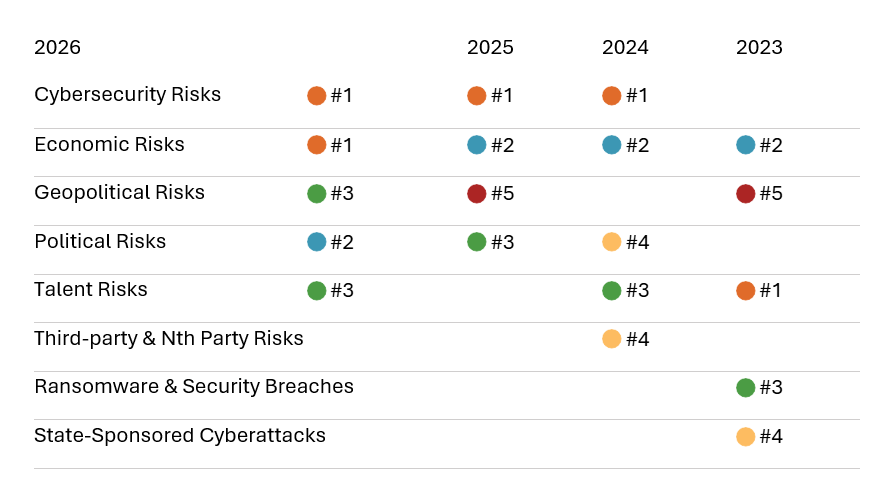
Economic risk rose to the top this year, tying cyber risk as the #1 business risk. More than half of respondents say economic risk is having a “severe” or “significant” impact on their business, fueled by tariffs, persistent inflation, and a cooling labor market.
Other top risks identified by respondents as having a severe or significant impact on their business are political risks (38%), geopolitical risks (37%), and talent risks (37%). All are hitting at once, which underscores the pressure risk teams are under as they manage a wide field of threats.
Top Five Risk Drivers
Geopolitical risk remains at the top, specifically the Iran war, which was named by 40% of respondents this year. The impacts are showing up in higher operating or production costs (65%), increased cybersecurity threats or attacks (58%), supply chain and shipping disruptions or delays (50%), and increased energy costs (49%).
Some 58% of respondents say they had a plan for geopolitical volatility heading into 2026. Of those, 31% said the impact was worse than they expected. Just 19% of survey respondents said they are very prepared to assess, manage, and recover from geopolitical risk – essentially flat over 2025.
According to the report, these threats are also compounding in ways that are harder to predict. Respondents said they were least prepared to manage secondary impacts like energy shortages and political volatility (20%), supply shortages and inventory stockouts (14%), and increases in logistics and transportation costs (14%).
Risk Management Workload Is Up, Budgets Are Not
The risk function is feeling the heat. Some 75% of respondents say pressure on them has increased over the past year – and 37% say the pressure is “high” or “extreme.”
Adding to the load, 41% of respondents say that in the past year, another department didn’t consult the risk team before making a risk-based decision that had a significant, unforeseen disruption on a different area of the organization.
While risk teams are taking on more, only 25% of survey respondents say their budget for risk management technology has increased in the past six months. The majority (66%) said their budgets have stayed the same, up slightly over previous years. This is a clear indication that investment isn’t keeping pace with higher expectations, an escalating workload, and the needs of a function that’s only grown more strategically important.
More Turn to AI as a Power Multiplier
To cope with the heavier workload, more risk leaders are using AI to see more, move faster, and adjust confidently the moment conditions change.
Nearly three-quarters of respondents (74%) say they currently use or are planning to use AI for risk management. That’s up from 70% last year and 62% in 2024. Risk teams most often use AI today for assessing risks, scenario planning and simulations, and for surfacing risks they hadn’t previously considered.
Top Use Cases for AI in Risk Management
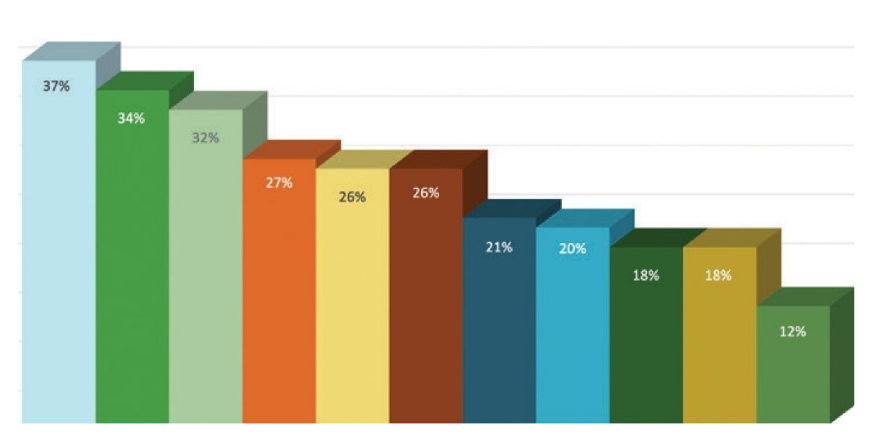
AI is also helping risk leaders identify a risk or vulnerability that would have been difficult to detect on their own. Thirty-one percent of survey respondents say AI has helped them uncover gaps or weaknesses in internal processes or controls in the past 12 months. Other ways AI has helped include identifying patterns or anomalies in large or unstructured data sets (25%), highlighting connections between risks that were not previously visible (22%), and detecting emerging or previously unrecognized risks (21%).
Risk Leadership Is Changing Shape
Just over half (53%) of companies have a chief risk officer. Of those that don’t, 91% say they have no plans to hire one in the next 6-12 months. These numbers haven’t meaningfully changed over the past four years.
The lack of movement, however, is less a sign that risk representation at the leadership level is stalling and more that it’s changing shape. Instead of concentrating risk ownership in a single person, more companies appear to be centralizing ownership in risk committees where connected technology keeps everyone working with the same facts, using the same language, and measuring status with the same metrics.
Risk teams are also actively working to make their value more visible and relatable to the C-suite. When asked what actions they’re taking to help the board and executive leadership team understand risks and the impacts, survey respondents point to a few clear tactics:
- 66% are making risk information and reports easier to understand.
- 59% are linking risks directly to business priorities, strategy and performance.
- 56% are focusing on top priority or new risks instead of all likely risks.
- 44% are quantifying the potential business or financial impact of key risks.
Risk Professionals Still Love the Job
Despite the pressure, risk professionals still love the job. A full 86% say they would recommend a career in risk management to a family member or friend based on their personal experience working in risk management over the past year and their outlook for the future. This is a sign that the work still feels valuable and strategic even as the job gets harder.
Other important findings from the survey:
- Worst-case scenario planning:
- 55% say they’ve simulated their worst-case scenario.
- 88% of those that have simulated their worst-case scenario say they’ve simulated it in the past 12 months.
- Spreadsheet use:
- 49% mostly or only use spreadsheets to manage risk.
- 51% mostly or only use dedicated software.
- Data confidence:
- 21% say they are very confident in the accuracy, quality and actionability of their risk management data.
- 71% say they’re somewhat confident (YoY trend: 65% in 2025, 63% in 2024, 59% in 2023).
- 8% say they aren’t confident (YoY trend: 10% in 2025, 16% in 2024, 17% in 2023).
- Crisis scenario planning:
- 74% collaborate with cross departmental stakeholders (YoY trend: 65% in 2025, 62% in 2024).
- 73% regularly reassess risks.
- 66% regularly update business continuity plans.
- 61% participate in tabletop exercises (YoY trend: 57% in 2025, 55% in 2024).
- 61% involve leadership in planning and testing for unexpected crises.
- 57% regularly reassess crisis response plans.
- 4% are not taking any steps to prepare for a crisis (YoY trend: 7% in 2025, 8% in 2024).
The Takeaways
Risk leaders are shouldering much more than a few years ago. They’re expected to cover more ground, see further ahead, and respond faster – all without a corresponding increase in headcount or budget. The most successful teams are leaning harder into AI, rethinking what risk leadership looks like, and pushing to be seen and heard at the board level.
Here’s what you can do now:
- Make your impact visible to the board. Connect risk directly to business priorities to make the case for more budget and resources.
- Build agility. Know your risk profile, critical dependencies, priorities, and strategic goals so you can move the moment something happens.
- Supercharge your power with AI. Let AI boost the capabilities of your risk team so you can respond to risk faster.
- Invest in technology that is built for the practitioner by practitioners. The right tools will make the job more manageable in an environment that keeps getting tougher.
For an in-depth look at the survey findings, download the 2026 New Generation of Risk Report, and visit riskonnect.com.